Genome biology
The Genome biology unit uses and develops cutting-edge methods to study how the information in our genome is regulated, processed, and utilised, and how its alteration leads to disease.
How cells interpret the DNA code to carry out biological functions
Genomes can be surprisingly simple and astonishingly complex at the same time. At first glance, they consist of only four different nucleobases – the individual letters of the DNA code. Bacteria carry their genomes as a simple loop of DNA in their cells. Other cells – known as eukaryotic cells – store their genomes inside a nucleus, in which the DNA is wrapped around proteins and coiled up for compact storage.
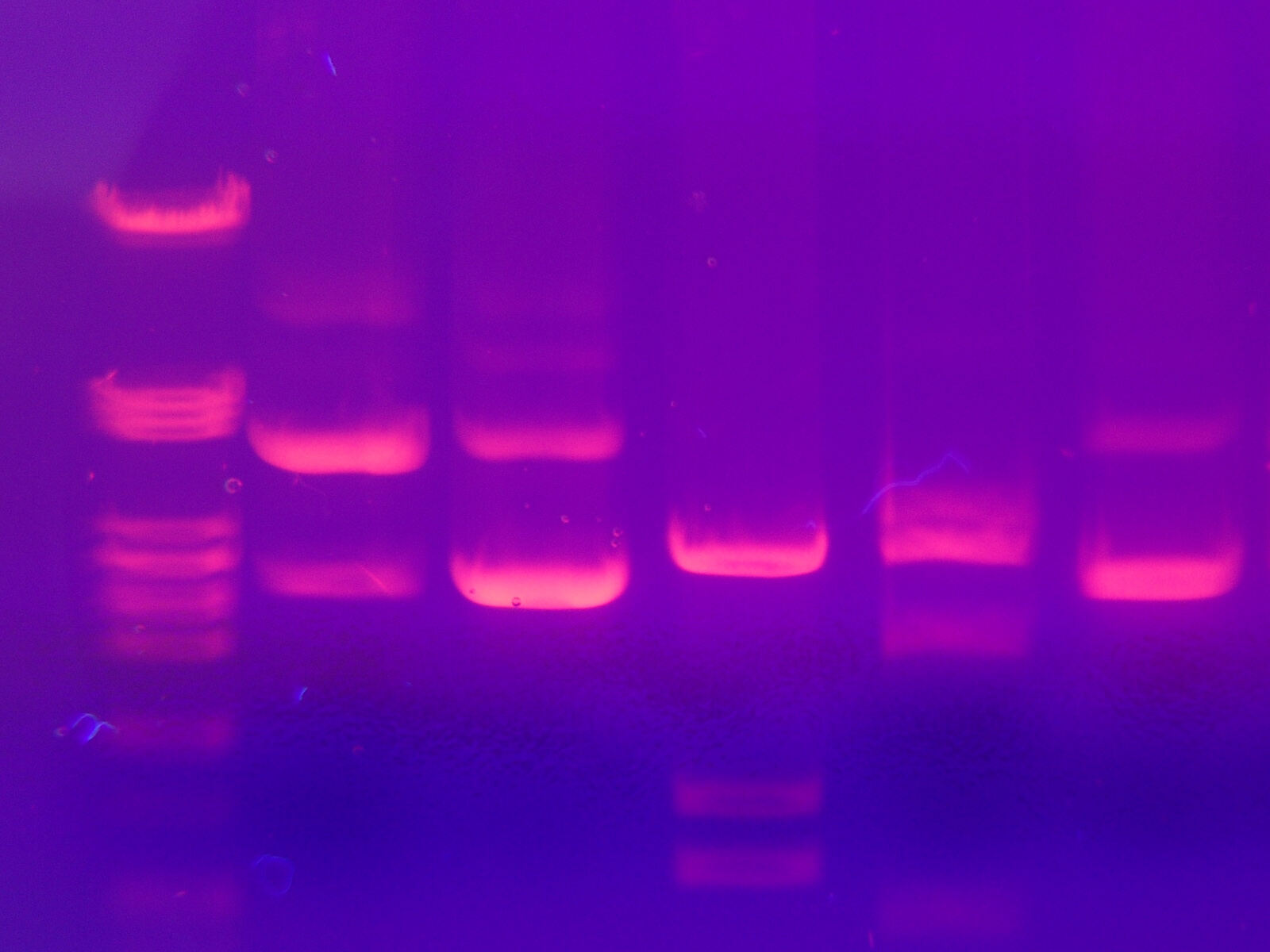
The nucleobases and proteins of the genome can be modified, replaced, or mutated. In eukaryotic cells, the spatial organisation of the genome determines which genes are active under which circumstances, at what level, and for how long. Dozens of proteins are involved in organising the genome and regulating gene activity. Cells combine these proteins in various ways to adapt to different situations and to fulfil highly specialised and varied functions. All of this makes the study of genomes a complicated endeavour.
The organisation of genomes, and the mechanisms cells use to access genomic information, are investigated across several research units and EMBL sites. While some groups try to understand how the genes on an entire chromosome can be switched off, others investigate the features that define highly active genomic regions. Another area of investigation is the process by which copies of chromosomes are segregated during cell division, so that the two resulting cells end up with the correct chromosomes.
EMBL scientists combine detailed mechanistic studies with techniques to analyse whole genomes. Bioinformatic approaches and experiments in a traditional lab setting complement each other. Together with the development of new statistical tools, these efforts will provide a clearer picture of how our genomes work.
The Genome biology unit uses and develops cutting-edge methods to study how the information in our genome is regulated, processed, and utilised, and how its alteration leads to disease.
Scientists in this unit use integrated structural and computational techniques to study biology at scales from molecular structures to organismal communities.
Genomics news from EMBL’s six sites

Here are seven key takeaways from an EMBL | EMBO symposium that brought together scientists from all over the world to discuss the role of AI in the life sciences.
Edit
MGnify Genomes offers new ways to explore microbial communities in soil, marine sediments, and the gut.
Edit
New study identifies ‘mechanotypes’ as the physical links between genes and body shapes, explaining and predicting how diverse forms arise in animals like corals and sea anemones.
EditThe research group of Oliver Stegle looks for a postdoctoral researcher to join a collaborative project with GSK with the goal to apply computational methods to investigate the effects of rare variants on human traits and single-cell readouts. Our research group is pioneering computational methods...
Closes on 1st May. Posted 30th March 2026
EditEuro-BioImaging ERIC is a European research infrastructure providing life scientists open access to advanced imaging technologies, expertise, training and data services through almost 300 imaging facilities distributed among 40 Nodes across Europe. The Euro-BioImaging Hub is distributed across three...
Closes on 15th May. Posted 9th April 2026
EditFrom microscopy to mycology, from development to disease modelling, EMBL researchers cover a wide range of topics in the biological sciences.