Subscribe to our SEPE Newsletter
Receive updates on science education events, teaching and learning material and public engagement activities of EMBL!
Discover how life interacts on our planet on this Science Education & Public Engagement page! Explore Planetary Biology at EMBL, dive into the TREC expedition and its science, meet the scientists behind it, and access our Planetary Biology-related resources.
For EMBL, sharing our science with everyone is an essential part of our work. That’s why EMBLs Science Education and Public Engagement team has developed a range of resources to accompany the topic of Planetary Biology and bring the science behind it closer to people.
Are you keen to dive deeper into Planetary Biology? Then explore our additional resources in this section!
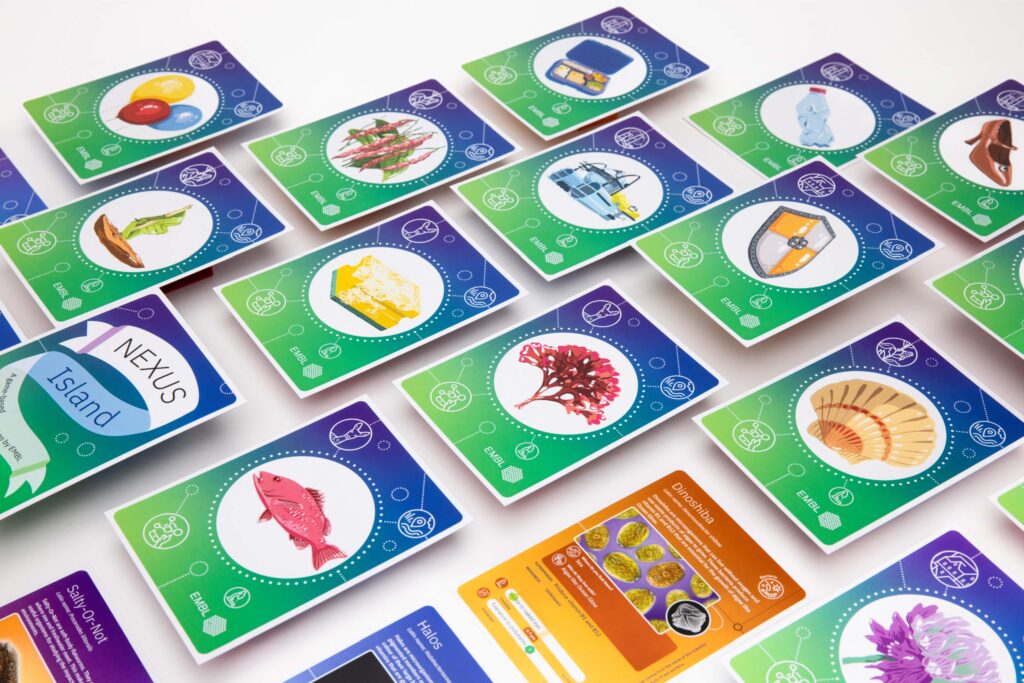
Developed as a game-based, interactive resource, Nexus Island takes its participants on a scientific journey to understanding the complex interactions of living and non-living factors in ecosystems and the effect of human activities on them. Participants role-play sampling a coastline, identifying organisms and finding collaborative solutions to environmental challenges. Inspired by the real-life EMBL expedition TREC, it was designed as either a school workshop or shorter outreach variant. Learn more about this engaging workshop on the resource webpage!
NEW! A Nexus Island extension focussing on satellite Earth Observation was created in collaboration with the European Space Agency (ESA) and is now available!
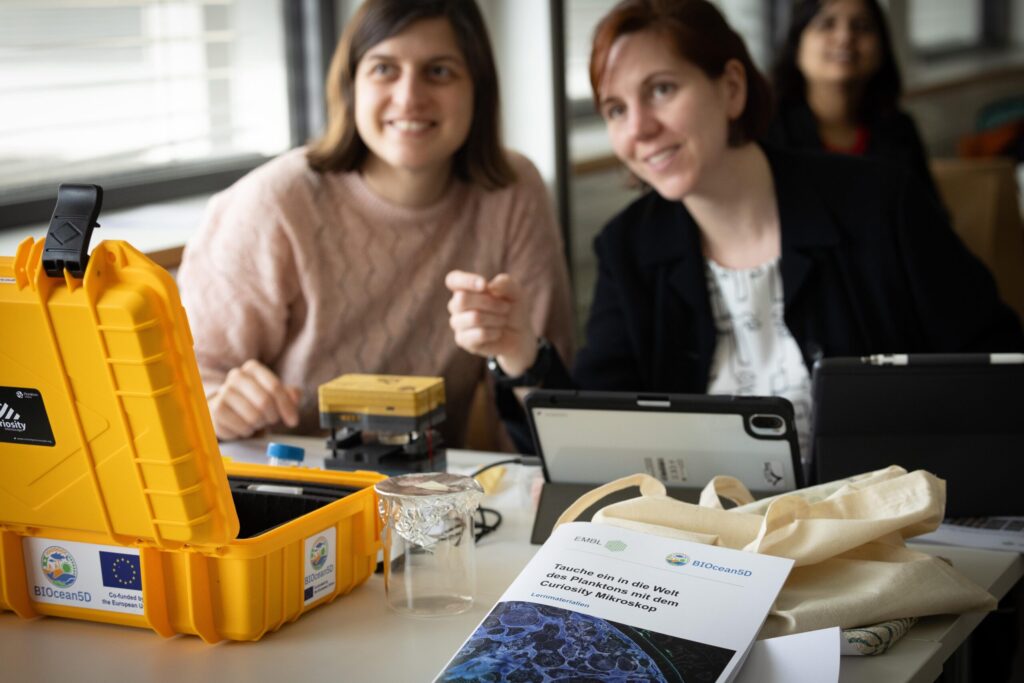
Get a glimpse into the fascinating world of plankton – the tiny underwater dancers that are so small that you can only properly see them with a microscope, but so important, that they power food webs and even the ecosystems of our planet!
This classroom-ready resource designed for secondary-school teachers includes a step-by-step protocol for collecting plankton and preparing them for viewing under a Curiosity or light microscope, along with a set of worksheets. Observe these tiny organisms with your students and explore their enormous importance for the ocean ecosystem and planetary health.
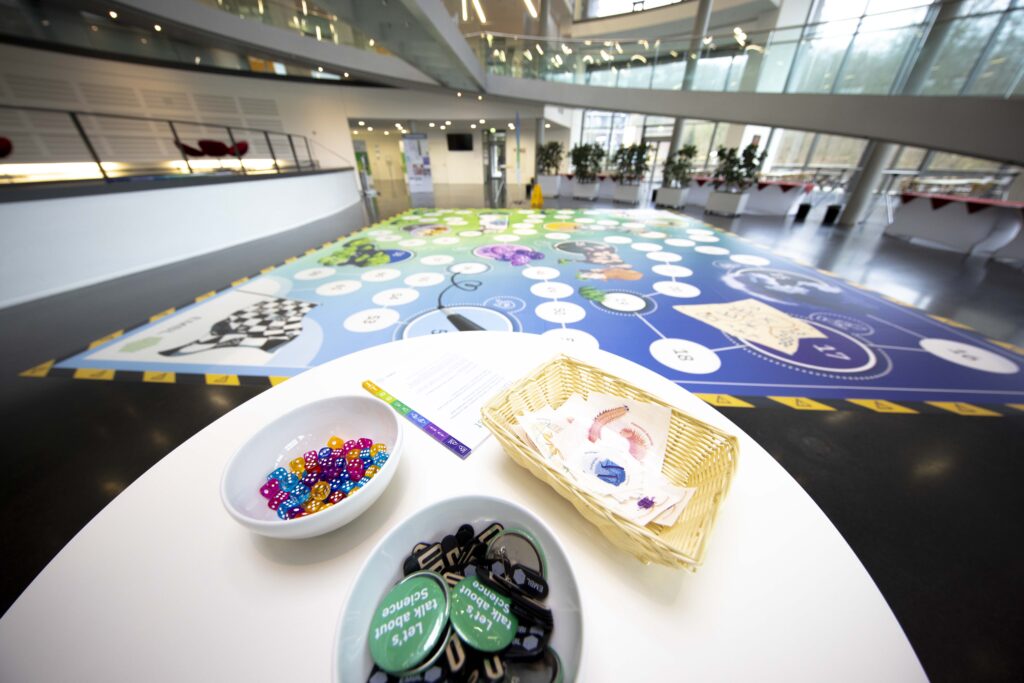
Being a field scientist can be fun, but also very stressful at times, especially if you have to deal with all kinds of surprises! In our “Game of the Goose”-inspired game “Run, Scientist, Run”, you slip into the role of a scientist during the TREC expedition and try to get your samples as quickly as possible to bring them back to the laboratory. Sounds easy? It is – if there wouldn’t be all kinds of hiccups and problems on the way. But don’t worry, sometimes things can also go really well and give you a boost. Do you have what it takes to be a TREC scientist? Then get the game now!
Am EMBL ist die Vermittlung unserer Wissenschaft an alle ein zentraler Bestandteil unserer Arbeit. Deshalb hat das Science Education & Public Engagement Team eine Reihe von Materialien entwickelt, die das Forschungsthema Planetary Biology begleiten, und die Wissenschaft dahinter erklären.
Bist du bereit, tiefer in die Planetary Biology einzutauchen? Dann entdecke unsere weiteren Ressourcen in diesem Abschnitt!
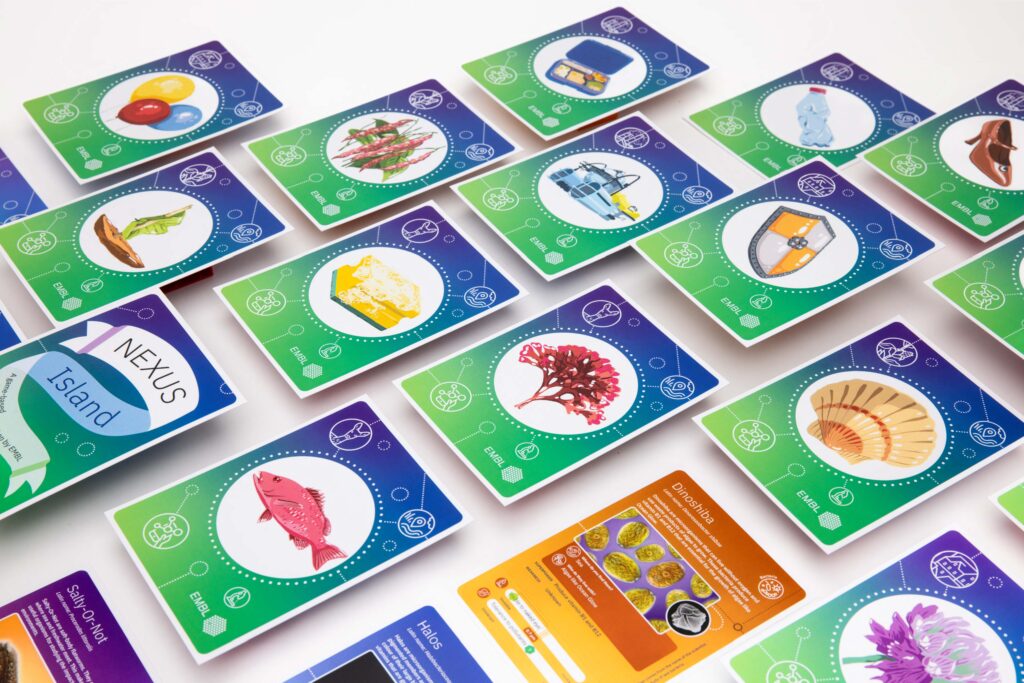
Nexus Island wurde als spielbasierte, interaktive Ressource entwickelt und nimmt die Teilnehmer*innen mit auf eine wissenschaftliche Reise. Sie vermittelt, wie lebende und nicht lebende Faktoren in Ökosystemen zusammenwirken und welche Auswirkungen menschliche Aktivitäten auf diese Systeme haben. Die Teilnehmer*innen simulieren in einem Rollenspiel die Beprobung einer Küste, identifizieren Organismen und finden gemeinsam Lösungen für Umweltherausforderungen. Inspiriert von der realen EMBL-Expedition TREC wurde Nexus Island sowohl als Schulworkshop als auch als kürzere Outreach-Variante konzipiert. Erfahre mehr über diesen spannenden Workshop auf der Website der Ressource!
NEU! In Zusammenarbeit mit der Europäischen Weltraumorganisation (ESA) wurde eine Erweiterung von Nexus Island mit Schwerpunkt auf der Erdbeobachtung per Satellit entwickelt, die nun verfügbar ist!
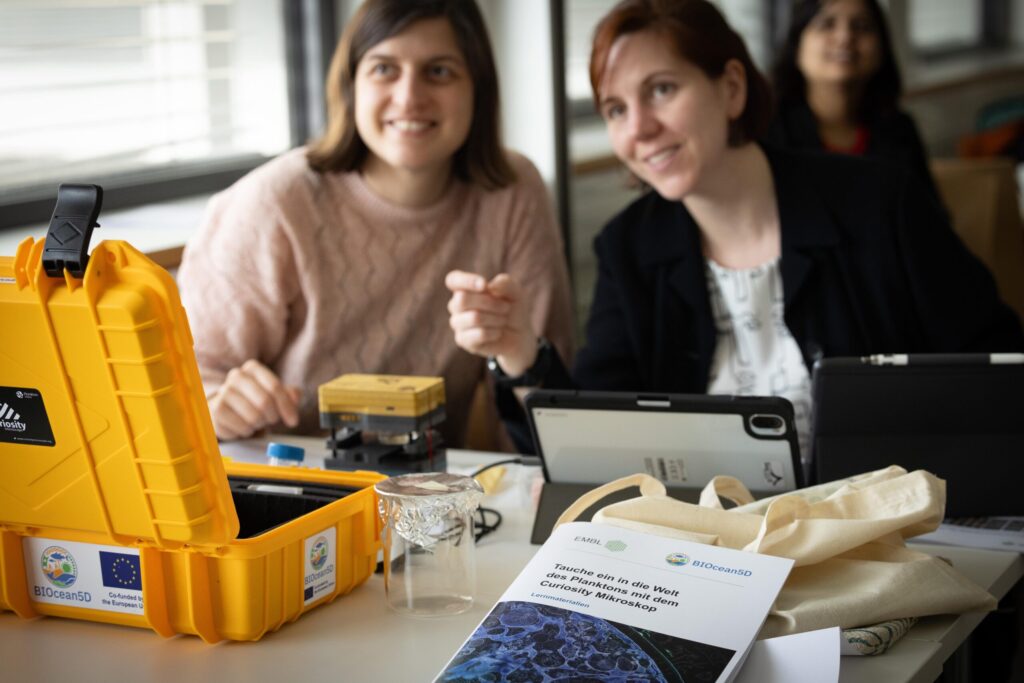
Erhalte einen Einblick in die faszinierende Welt des Planktons, der winzigen Unterwassertänzer, die so klein sind, dass man sie nur unter dem Mikroskop sehen kann, aber so wichtig, dass sie Nahrungsketten und ganze Ökosysteme unseres Planeten antreiben!
Diese Lernressource für Lehrer*innen der Sekundarstufe umfasst eine Schritt-für-Schritt Anleitung zur Entnahme von Planktonproben und deren Vorbereitung für die Betrachtung unter einem Curiosity- oder Lichtmikroskop sowie eine Reihe von Arbeitsblättern. Beobachte diese winzigen Organismen und entdecke ihre enorme Bedeutung für das Ökosystem der Ozean und die Gesundheit unseres Planeten.
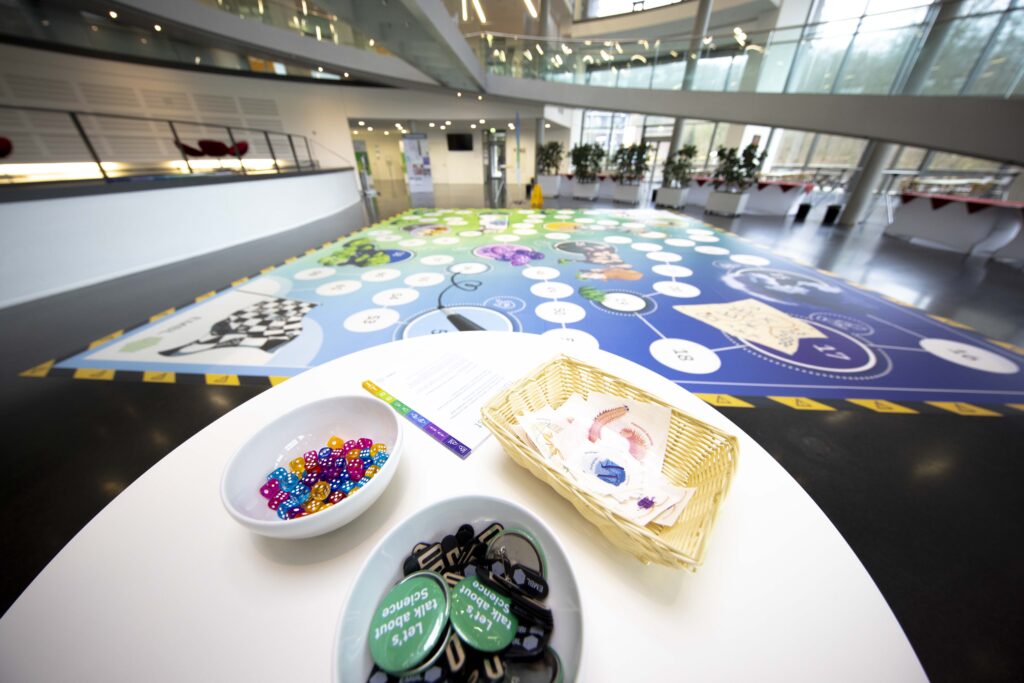
Als Feldforscher*in zu arbeiten kann Spaß machen, aber manchmal auch sehr stressig sein, vor allem, wenn man mit allerlei Überraschungen konfrontiert wird!
In unserem vom „Gänsespiel” inspirierten Spiel „Run, Scientist, Run” schlüpfst du in die Rolle eines Forschenden während der TREC-Expedition und versuchst, deine Proben so schnell wie möglich zu sammeln und sie ins Labor zu bringen. Klingt einfach? Ist es auch – wenn es unterwegs nicht alle möglichen Hindernisse und Herausforderungen gäbe. Aber keine Sorge: Manchmal läuft auch alles wie am Schnürchen und gibt dir einen kräftigen Schub. Hast du das Zeug zum/zur TREC-Wissenschaftler*in? Dann hol dir jetzt das Spiel!
EMBL Heidelberg
Meyerhofstraße 1
69117 Heidelberg
Germany
Receive updates on science education events, teaching and learning material and public engagement activities of EMBL!