PhiC31 integrase-mediated site-specific transgenesis
This method utilises the recombination machinery of the phiC31 integrase. The plasmid, containing the gene of interest flanked by attB sites, is inserted into a predetermined attP docking site on a specific chromosome in Drosophila attP landing site lines. We have a selection of attP landing sites and can provide advice on the best landing site.
CRISPR genome editing
The CRISPR/Cas system is a simple yet powerful genome-engineering tool that allows deletion and insertion of genes of interest at a specific locus. We have a selection of lines expressing Cas9 in the germline.
P-element mediated germ line transformation
Plasmid DNA containing a transgenic construct flanked by P-element inverted repeats is mixed with a P-element transposase-carrying helper plasmid and injected into embryos of w1118 flies.
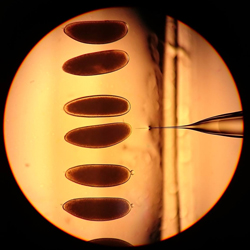
Submitting an order
Good DNA preparation is essential for efficient transgenesis. Prepare your DNA via Midi or Maxi prep, use all optional wash steps in manufacturer’s instructions, and elute in double-distilled water. The OD260/280 ratio of your DNA sample should be 1.80-1.90. Provide >20 µL of your DNA at a final concentration of 100-300 ng/µL for injection.
Fill in the relevant form phiC31-integrase, CRISPR, P-element and submit via email or in room 546. All tubes with DNA samples, clearly labeled with a job name, should be deposited in drawer #2 of the “Drosophila Transgenesis Freezer” in room 546.
When the injected embryos hatch, you will receive a notification email to pick up tube(s) with hatched larvae. After you finish screening for transformants, please remember to send back the form you received with the larvae, filled in all its parts. Your feedback is very important to keep the service running optimally.
Contact
Get in touch if you would like to try any specialised injections (RNA, dyes, etc.) in Drosophila or in other insect/arthropod species. Training to learn how to inject can also be provided.