EMBL and its new Programme:

Opportunities for Israel

Virtual event

Agenda

Aim of this workshop

In its new Programme Molecules to Ecosystems, EMBL will build on its existing expertise and expand into new research areas, including microbial ecosystems, human ecosystems, planetary biology and infection biology. The new Programme also offers a unique collaborative model to EMBL member states, allowing them to coordinate and truly integrate research across national borders and disciplines. This workshop aims to maximize existing links and explore new synergies between EMBL and the Israeli scientific community, to encourage cooperation on joint projects to deliver research relevant to pressing societal challenges.

Time
IDT
Topic and session details
NB: All times are listed in Israel Daylight Time (IDT)
12:30Opening remarks

Abraham J. Domb
Chief Scientist, Ministry of Science and Technology, Israel  
12:40EMBL and its new Programme: Opportunities for Israel  

Edith Heard
EMBL Director General
12:55Session 1: Human Ecosystems (10 min, 5 min Q&A per speaker)

Chair
Iris Eisenberg
Ministry of Science and Technology, Israel

Speakers
Helen Parkinson, Head of Molecular Archival Resources, EMBL-EBI
Thomas Keane, Team Leader, European Genome-phenome Archive and European Variation Archive, EMBL-EBI
Ilan Tsarfaty
, Associate Professor, Department of Clinical Microbiology and Immunology, Tel Aviv University
13:30 Coffee break
13:50Session 2: Structural Biology

Chair
Matthias Wilmanns
Head of EMBL Hamburg

Speakers
Oded Livnah
Head of Research Group Structural Biology of Proteins, the Hebrew University of Jerusalem
Julia Mahamid
Group Leader, Cell Biology and Biophysics Unit, EMBL Heidelberg
Meytal Landau
Israel Institute of Technology – Technion,  Visiting Group Leader at EMBL Hamburg  
14:35Session 3: EMBL Imaging Centre presentation
Chair
Joel Sussman
Weizmann Institute of Science  

Speaker
Christoph Müller

Head of Structural and Computational Biology Unit, EMBL Heidelberg  
14:50
Short break
14:55Session 4: Planetary Biology

Chair
Detlev Arendt
Group leader, Developmental Biology Unit, EMBL Heidelberg

Speakers
Meital Reches
Associate Professor of Chemistry, the Hebrew University of Jerusalem
Yannick Schwab
Team Leader and Head of Electron Microscopy Core Facility, EMBL Heidelberg  
15:25General discussion and Q&A

Moderators
Matthias Wilmanns
Head of EMBL Hamburg

Joel Sussman
Weizmann Institute of Science  
16:00Closing

Speakers

About the speakers

Edith Heard, FRS

EMBL Director General. Edith Heard’s group is studying epigenetic mechanisms in development and disease. The Heard group focuses on epigenetic processes such as X-chromosome inactivation, in order to learn more about the basic principles of gene regulation, and to explore the roles of chromatin modifications, chromosome organisation and non-coding RNAs on gene expression in development and disease.

Session 1: Human Ecosystems

Thomas Keane

Team Leader for the European Genome Phenome Archive (EGA) and the European Variation Archive (EVA) at EMBL-EBI. Thomas is responsible for strategic planning for EGA and EVA, is a member of the Global Alliance for Genomics and Health (GA4GH) steering committee, and co-leads the Large-scale Genomics workstream. His research interests are in using genomic technologies to understand biological processes, with a particular focus on rodent models for human disease.

Helen Parkinson

Head of Molecular Archival Resources at EMBL-EBI, comprising several EBI core resources including the European Nucleotide Archive, European Genome-phenome Archive, European Variation BioSamples database. Helen Parkinson leads the Samples, Phenotypes and Ontologies team, delivering databases, data integration tools and ontologies for biomedicine and participates extensively in external collaborations ranging from data analysis and generation projects to infrastructural integration projects such as the ELIXIR-led initiatives BioMedBridges, CORBEL and EXELERATE and EOSCLife.

Ilan Tsarfaty

Associate Professor, Department of Clinical Microbiology and Immunology, Sackler Faculty of Medicine, Tel Aviv University and Director, Sackler Cellular and Molecular Imaging Center (SCMIC). Prof. Tsarfaty’s research focuses on further understanding the role of Met (a receptor tyrosine kinase) and Mimp/Mtch2 (a mitochondrial carrier homologue cloned in the lab) in cancer progression and metastasis, and to develop modalities for personalizing targeted Met therapy.

Session 2: Structural Biology

Meytal Landau

Israel Institute of Technology – Technion, Visiting Group Leader at EMBL Hamburg. At EMBL Hamburg, Meytal Landau is exploring protein fibrils in the context of infectious diseases – studying proteins that make bacteria more harmful, and the role of these fibrils in causing neurodegenerative diseases. Meytal Landau decided to spend a year at EMBL Hamburg, where she would have access to the cutting-edge cryo-electron microscopy infrastructure at the Centre for Structural Systems Biology (CSSB).

Oded Livnah

Head of Research Group Structural Biology of Proteins, the Hebrew University of Jerusalem. Livnah group is focusing on the structural determination of biologically related macromolecules via X-ray crystallographic techniques. Ligand recognition, initial signaling events, and the role of dimer/oligomer orientation in cytokine receptor systems. Structural studies of avidin/streptavidin – biotin high affinity systems. Structural based drug design and optimization and combinatorial approaches in drug discovery.

Julia Mahamid

Group Leader, the Cell Biology and Biophysics Unit, EMBL Heidelberg. Mahamid’s group is studying in situ structural analysis of phase separation and molecular crowding. The Mahamid group brings together two disciplines in biology, namely the emerging field of phase-separated dynamic assemblies in cell biology and state-of-the-art cellular cryo-electron tomography, to advance the understanding of the molecular organisation of the cytoplasm.

Matthias Wilmanns

Head of EMBL Hamburg. Wilmanns group is investigating the structure and function of molecular machinery for protein translocation across membranes. The Wilmanns group employs an integrative structural biology approach complemented by functional experiments to investigate the overall structures of challenging protein complexes of biomedical relevance to address major research questions in the infection process of pathogenic bacteria but also in cancer, cardiology, and nephrology.

Session 3: EMBL Imaging Centre Presentation

Christoph Müller

Head of Structural and Computational Biology Unit and Group Leader at EMBL. Müller group is investigating molecular mechanisms of transcriptional regulation in eukaryotes. The Unit pursues an ambitious research programme in integrated structural and computational systems biology bridging between various spatial and temporal scales. The Müller research group uses cryo-electron microscopy, X-ray crystallography, biophysical and biochemical approaches to learn about the molecular mechanisms of transcription regulation in eukaryotes, in whom DNA is packaged into chromatin.

Session 4: Planetary Biology

Detlev Arendt

Detlev is a group leader and senior scientist in the Developmental Biology Unit at EMBL Heidelberg and holds an honorary professorship at the Centre for Organismal Studies at Heidelberg University. Along with his laboratory work, Detlev is a leading figure in EMBL’s new research area of Planetary Biology and was heavily involved in setting up the Green EMBL initiative.

Meital Reches

Associate Professor of Chemistry, the Hebrew University of Jerusalem. Meital’s research interest is understanding how proteins adsorb to inorganic surfaces, a line of enquiry that is important in many biotechnological applications, including the design of medical implants, fabrication of antibacterial surfaces and biomineralization.

Yannick Schwab

Team Leader and Head of Electron Microscopy Core Facility at EMBL Heidelberg. The Schwab team is developing tools for the 3D correlation of data generated by multiple imaging modalities, such as fluorescence microscopy, X-ray imaging and electron microscopy.

Opportunities at EMBL

Find out more in our brochures

EMBL’s scientific services

EMBL provides life science researchers in Europe and beyond with access to the very latest in scientific technologies, infrastructure, and data resources.

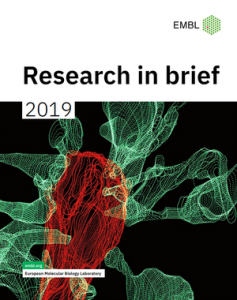
Research in Brief 2019

Research in Brief gives an overview of the research and services at EMBL. It introduces all group and team leaders.

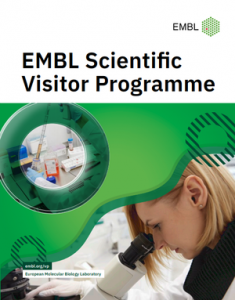
EMBL Scientific Visitor Programme

The EMBL Scientific Visitor Programme is part of the EMBL International Centre for Advanced Training and provides visiting scientists with logistical and organisational support, to make their stay at EMBL a pleasant and productive experience.

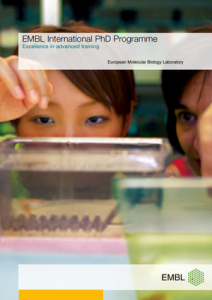
EMBL International PhD Programme

Provides prospective students with valuable information about the EMBL International PhD Programme and gives answers to the most frequently asked questions.

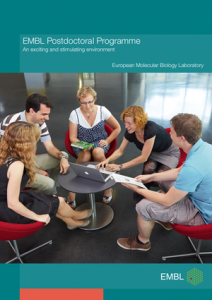
EMBL Postdoctoral Programme

Find out more about opportunities for postdoctoral research at EMBL, and read success stories of former postdoctoral fellows.

Date: Wednesday 2 June 2021

Time: 11:30-15:00 (CEST) / 12:30-16:00 (IDT)

Location: virtual

Fees: free


Contact: Maria Ananchenkova, International Relations Officer, EMBL


Participants

Detlev Arendt   

Group leader, Developmental Biology Unit, EMBL Heidelberg

Abraham J. Domb

Chief Scientist, Ministry of Science and Technology, Israel

Iris Eisenberg

Ministry of Science and Technology, Israel

Thomas Keane

Team Leader, European Genome-phenome Archive and European Variation Archive, EMBL-EBI

Meytal Landau

Israel Institute of Technology – Technion, Visiting Group Leader at EMBL Hamburg

Oded Livnah

Head of Research Group Structural Biology of Proteins, the Hebrew University of Jerusalem

Julia Mahamid

Group Leader, Cell Biology and Biophysics Unit, EMBL Heidelberg

Christoph Müller

Head of Structural and Computational Biology Unit, EMBL Heidelberg

Helen Parkinson

Head of Molecular Archival Resources, EMBL-EBI 

Meital Reches

Associate Professor of Chemistry, the Hebrew University of Jerusalem

Yannick Schwab

Team Leader and Head of Electron Microscopy Core Facility, EMBL Heidelberg

Joel Sussman

Weizmann Institute of Science   

Ilan Tsarfaty

Associate Professor, Department of Clinical Microbiology and Immunology, Tel Aviv University

Matthias Wilmanns

Head of EMBL Hamburg
Edit