Alexander Aulehla
Head of Developmental Biology Unit and Scientific Head of LAR
EditUnravelling the impact of variation to understand responses at the cellular and multicellular levels
EMBL will aim to unravel the impact of genetic and environmental variation in living systems and to understand responses at the single- cell and multicellular levels.
EMBL will use novel experimental strategies, cutting-edge technology development, and predictive computer modelling to measure and perturb dynamic living systems and their interplay with the environment. Increasing knowledge about the robustness and plasticity of embryonic cell clusters, bioengineered tissues, and model systems will be essential to reveal mechanisms that drive normal life processes, and to understand how these processes respond to disruptive environmental changes.
This Research Theme has four aims:
“We want to challenge our understanding of how cells and ultimately organisms respond to each other and their environment. By pinpointing the molecular mechanisms that drive cellular dynamics, we hope to understand the world around us on a whole new level.“
Head of Developmental Biology Unit and Scientific Head of LAR
Edit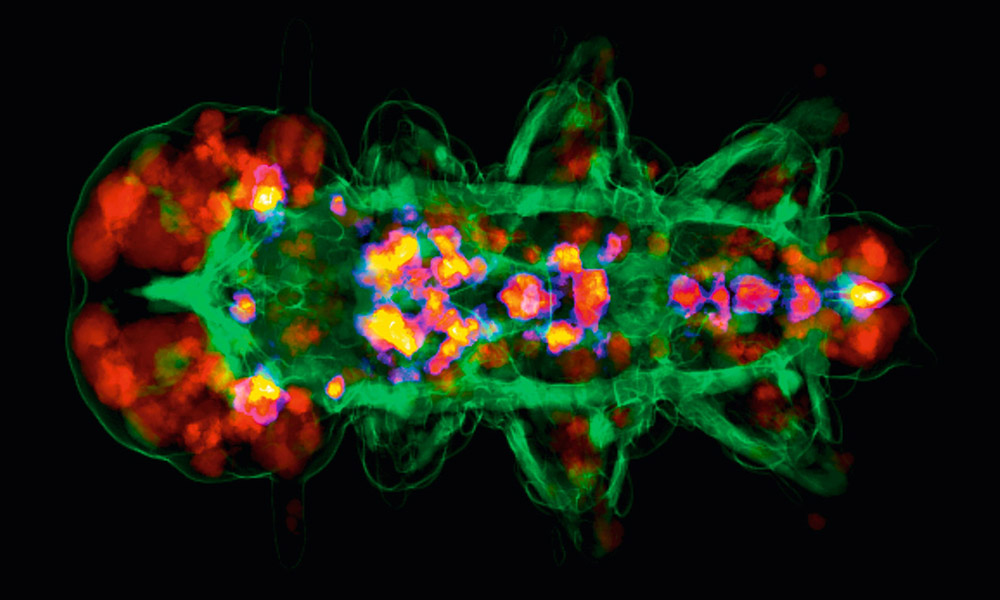
Alexander Aulehla
Head of Developmental Biology Unit, EMBL Heidelberg
Jan Ellenberg
Head of Cell Biology and Biophysics Unit, Head of EMBL Imaging Centre, EMBL Heidelberg
James Sharpe
Head of EMBL Barcelona, EMBL Barcelona
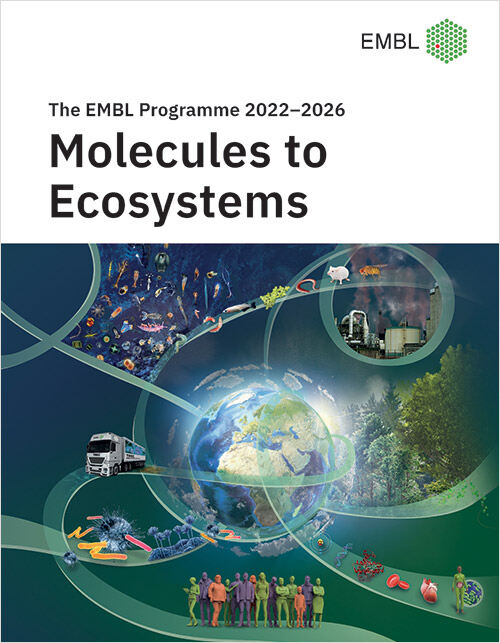
From exploring the molecular components inside a cell to studying whole populations and ecosystems, EMBL scientists will explore these different scales through eight research themes that foster collaborative, multidisciplinary research.
Learn more about the technologies referred to in the EMBL Programme (pdf)
EMBL’s vision is to advance understanding of ecosystems at the molecular level and study life in context. The result will be fundamental research that expands what we know about life on earth and provides the means to address major global challenges.
This new Programme will expand EMBL’s scope to study the molecular basis of life in the context of changing environments, transforming our understanding of life on earth and informing potential solutions for some of society’s biggest challenges, such as irreversible loss of biodiversity, antimicrobial resistance, pollution, climate change, food security, and emergent pathogens.